


What if one of the most romantic novels in English literature began not in London, but in the quiet hills of Kent? Step off your train at Sevenoaks and walk into the world that inspired “the longest and most charming love letter in literature”.
Orlando is one of Virginia Woolf’s most popular novels, written for and inspired by her lover and close friend, Vita Sackville-West. It was at Knole, Vita’s childhood home, that it all began: a story of beauty, privilege, and the painful truth that she could never inherit the place she loved most.
Knole wears its centuries of history gracefully. From manor house to the home of archbishops and royalty, and finally the grand ancestral seat of the Sackville family, this is a house that has seen it all: love affairs, literary brilliance, scandal, and survival. Today, it stands as one of the best-preserved stately homes in England, a living chronicle of five centuries of heritage.
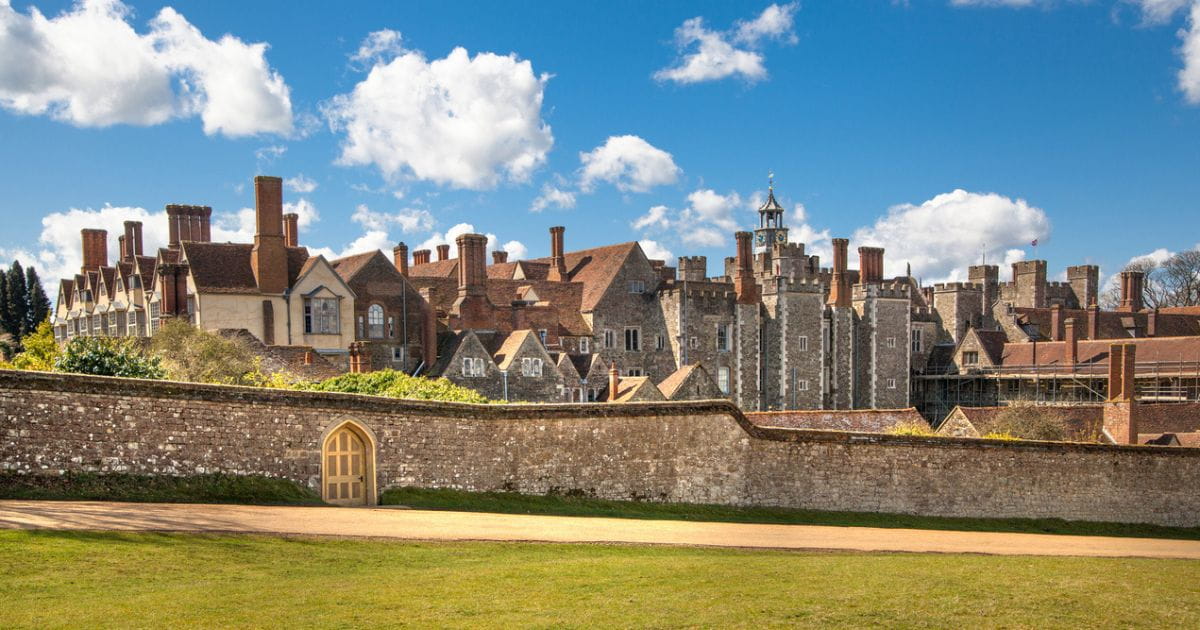
The fascinating history of Knole
The earliest version of Knole was a manor house dating back to the 15th century, extended by the Archbishops of Canterbury into something entirely splendid. Then came the Tudors. Henry VIII hunted here and thought it a fine place for his daughter, the future Queen Mary I, to stay during his divorce from her mother, Catherine of Aragon. His daughter with Anne Boleyn, the future Queen Elizabeth I, is said to have visited too, perhaps walking the same long gallery you can stroll through today.
Knole and the Sackvilles
When the Tudor reign ended in 1603, Knole became home to the Sackville family. Thomas Sackville, a poet, statesman and courtier, transformed it into an aristocratic powerhouse. Over the next four centuries, his descendants would rebuild, refurnish and restore Knole in waves, leaving behind layers of history that still shape the house today.
In 1637, the marriage of Lady Frances Cranfield, daughter of King Charles I's fallen minister Lionel Cranfield, to Richard Sackville, 5th Earl of Dorset, made a lasting impact on the heritage of Knole. Lady Frances inherited the estates of her father, who was a compulsive collector, and his precious belongings flowed straight to Knole: exquisite furniture, portraits, and paintings that line the long corridors and grand showrooms.
Their son, Charles Sackville, 6th Earl of Dorset, took the family’s flamboyance to new heights. As Lord Chamberlain to William III, he had access to royal palaces and quietly helped himself to their unwanted luxuries. Gilt chairs stamped “WP” for Whitehall Palace, velvet hangings from royal bedchambers, and silks that still shimmer in Knole’s staterooms.
But grandeur has its price. Charles nearly bankrupted the estate, leaving his son Lionel to rebuild both family finances and reputation. By 1720, Lionel was made the 1st Duke of Dorset, and Knole entered its golden age.
A house of art and love
Lionel’s grandson, John Frederick Sackville, 3rd Duke of Dorset, was a great patron of the arts. His collection of Gainsboroughs and Reynolds portraits still hangs proudly in Knole’s galleries. The Brown Gallery, lined with rows of gilded portraits and early English furniture, feels more like a private museum than a family home.
Then there’s the romance. At the foot of the grand staircase stands a statue of La Baccelli, the ballerina who stole the Duke’s heart in the 18th century. She lived at Knole for years, until his later marriage forced her statue into the attic. Today, the statue is back in pride of place, an elegant reminder that Knole has always been a house of passions as well as portraits.
Vita’s story
Fast forward to 1892. Victoria Mary Sackville-West, known as Vita, was born here, the only child of Lionel and Victoria Sackville-West. As a girl, she would guide visitors through Knole’s echoing rooms, her voice full of pride. Yet she knew she would never inherit it. The laws of the time prevented women from inheriting their estate, and when her father died, Knole passed to her uncle instead. It was, she later said, the deepest wound of her life.
Vita turned that heartbreak into art. Her novel The Edwardians was a thinly disguised portrait of Knole’s world, while Knole and the Sackvilles was her attempt to preserve it in prose.
Then came Orlando. Virginia Woolf’s luminous reimagining of Vita’s story, transforming her loss into a fantastical meditation on time, gender, and inheritance. The original manuscript, inscribed “Vita from Virginia”, still rests within Knole’s walls, a relic of their love and friendship. Vita’s son, Nigel Nicolson, called it “the longest and most charming love letter in literature.”
Vita went on to make another home at Sissinghurst Castle with her husband Harold Nicolson, where together they created one of the world’s most famous gardens. Yet Knole was always her home, the place that made her a writer, a dreamer, and the heroine of a story that still captures hearts nearly a century later.
Knole today
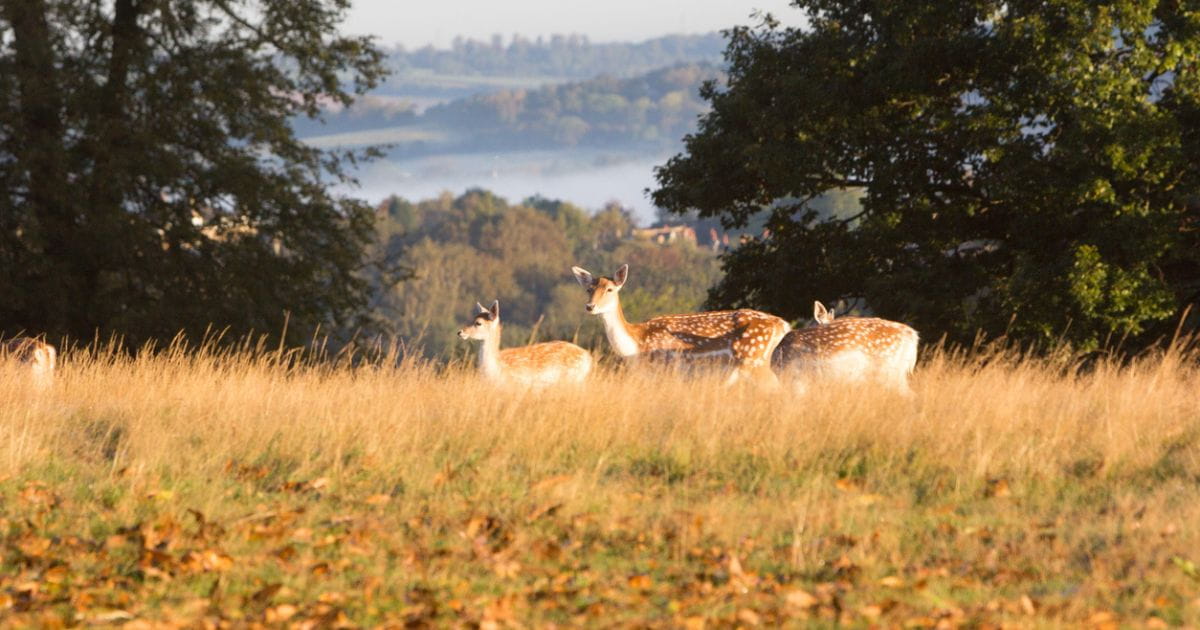
The Sackvilles gradually withdrew into the heart of the house over time, leaving vast rooms untouched, furniture draped and treasures covered. Ironically, that neglect preserved Knole almost perfectly. Today, its collections remain among the most complete of any country house in Britain, from Stuart chairs to Jacobean ceilings, embroidered tapestries to entire rooms frozen in time.
In 1946, Knole was gifted to the National Trust, and its private apartments were leased back to the Sackville-West family who still live here today. Visitors can wander the rooms, see the art that once adorned royal palaces, and then step outside into one of the largest enclosed deer parks in England.
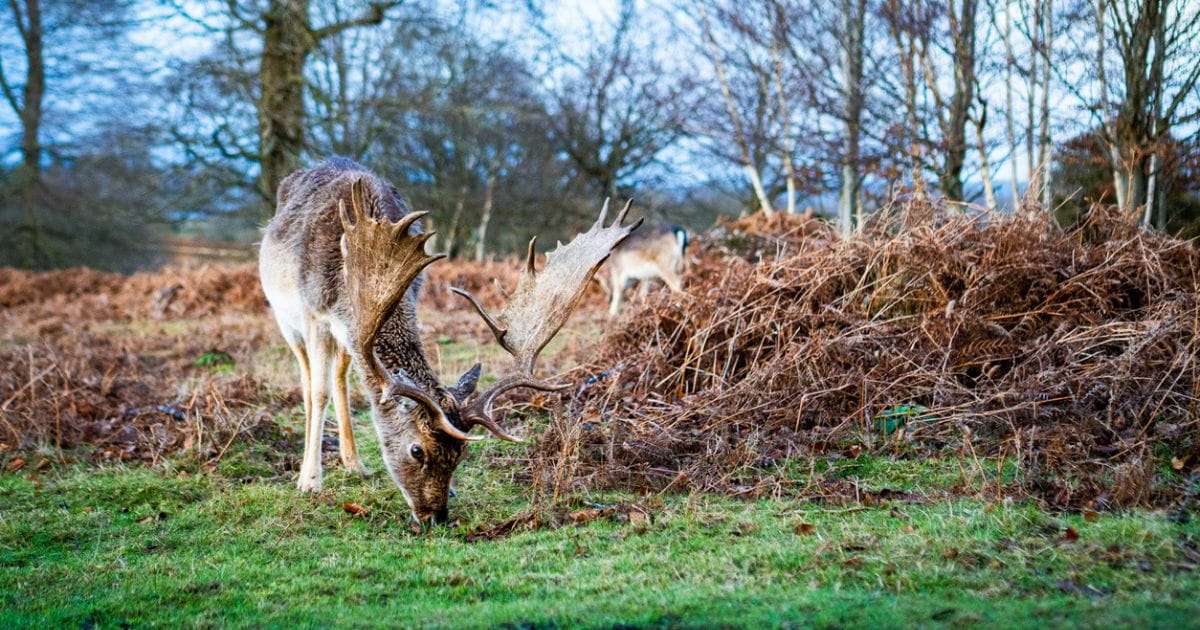
Knole’s parkland is 1,000 acres of pure escapism: ancient oaks, rolling lawns, and a herd of wild fallow deer who have grazed here since Tudor times. The air smells of earth and oak bark, and if you arrive early, a romantic mist hovers low over the fields like a scene from a painting. It’s the perfect place for a walk, no matter the season.
The on-site café, tucked inside the old Orangery, serves barista coffee, soups, and cakes that taste as homemade as they look. Rest here after your walk through the grounds, hot drink in hand, while deer pass by the window.
See it for yourself
The best way to get to Knole is by train, especially as you can get two for one entry to the house when you show proof that you travelled by train. You’ll also enjoy 20% off in Knole’s gift shop and bookshop when you show proof of travelling by train at the till. Proof of travel can be a paper or e-ticket. Please note, these discounts cannot be used in conjunction with any other offer. Entry to the park is free, charges only apply for the house.
Thameslink trains to Sevenoaks run regularly from central London and the South East, and the walk from the station takes around twenty minutes. You’ll pass quiet streets and leafy paths before the park gates appear ahead of you, sweeping you away from the High Street and leading into one of England’s grandest and most storied estates.
Visit Knole to walk in Vita’s footsteps, see the house that inspired Orlando, and spend a day surrounded by centuries of important British art, history, and natural beauty.
